I cook this Mediterranean salmon when weeknights are full and I still want something bright, healthy, and a little special on the table. In my kitchen it lives in heavy skillet rotations: the salmon gets a quick sear, the rice and chickpeas warm through with bright tomatoes and olives, and a lemony feta finish pulls everything together. It’s one pan, minimal cleanup, and plenty of flavor so you don’t miss the fuss.
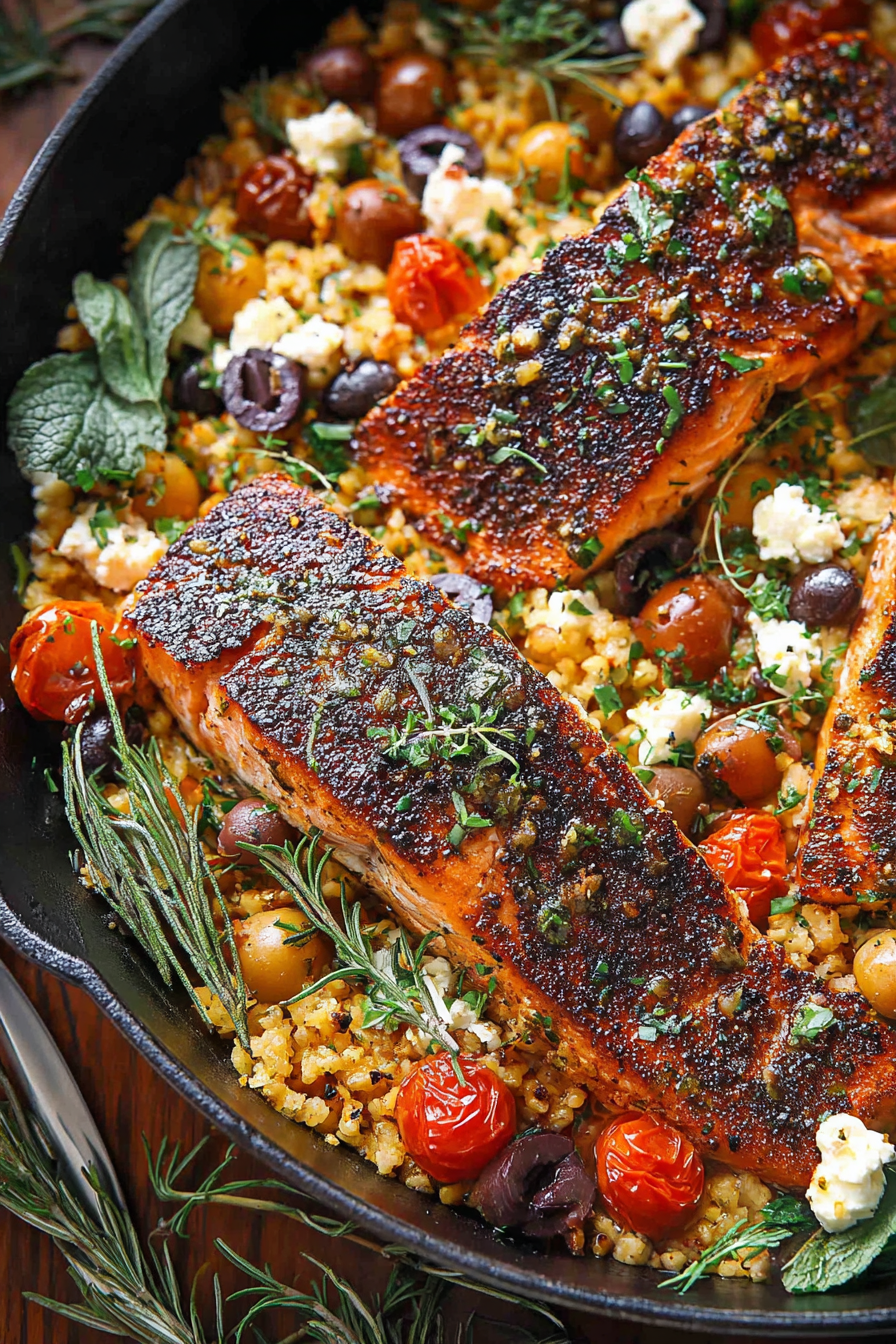
I like how the colors pop: ruby cherry tomatoes, glossy olives, pale cubes of feta, and the salmon’s warm orange flesh. The smell is citrus-bright from lemon and warm from smoked paprika and oregano. Because I make this often, I’ve learned which shortcuts keep texture perfect and which pantry items are worth keeping on hand so a healthy dinner is always quick to assemble.
Whether you’re feeding a family on a Tuesday or serving guests on short notice, this recipe balances convenience with Mediterranean ingredients that taste fresh and lively. If you want a chilled side, pair it with a bright pasta salad to round out the plate and a textural contrast.
Note: The ‘Pro-Tips’, ‘Troubleshooting’, and ‘Variations’ sections below are formatted as bulleted lists for quick scanning.
Why This Mediterranean Salmon Works for Busy Weeknights
This recipe is built to save time without skimping on flavor. The one-pan approach reduces dishes and lets you finish protein and starch in a single vessel — that means less juggling and more time at the table. Salmon cooks fast, so the whole meal fits into a 30-minute window: a hot pan for a crisp exterior, then a brief finish so the fish stays tender.
Pantry staples like canned chickpeas, jarred olives, and rice pull the dish together quickly; fresh ingredients (cherry tomatoes, lemon, oregano) add brightness in minutes. Sensory details matter here: imagine the citrus aroma lifting through the warm rice, the snap of roasted tomatoes, and the briny pop of olives against flaky salmon.
What You’ll Need for Mediterranean Salmon
Below I talk through the ingredients conversationally — what they do and easy swaps for dietary preferences. If you want a bright side, pair your salmon with a refreshing Mediterranean pasta salad for a delightful meal.
- Salmon – The centerpiece: choose a firm, fresh fillet. Skin-on pieces help hold moisture while you sear.
- Smoked paprika and dried oregano – Provide warm, herbal notes that echo classic Mediterranean flavors.
- Olive oil – For searing and finishing; use extra virgin for the dressing to add fruity complexity.
- Rice – A neutral, comforting base that soaks up juices; jasmine or similar work well for aroma.
- Chickpeas – Add fiber and bulk; canned is a weeknight shortcut.
- Cherry tomatoes – Add freshness and a sweet-tart burst when warmed.
- Kalamata and green olives – Bring briny contrast and visual color.
- Lemon – Acid brightens the whole dish; use fresh juice for best brightness.
- Feta – Salty, creamy finish; use a dairy-free feta for a vegan-friendly swap.
- Fresh herbs (oregano) – Finish the dish with an herbal lift; parsley works if you prefer a cleaner herb note.
- Gluten-free and dairy-free options – This recipe is naturally gluten-free when you use gluten-free rice; for dairy-free, skip the feta or use a plant-based alternative.
Step-by-Step Guide to Cooking Mediterranean Salmon
- Heat a large, high-sided skillet over medium for a few minutes so it’s truly hot — a properly heated pan gives the salmon a quick, flavorful sear.
- Season the salmon on the flesh side with smoked paprika, oregano, dried parsley, red chili flakes, and salt. Rub a bit of olive oil over the seasoned flesh to help the spices adhere.
- Add olive oil to the hot skillet and place salmon skin-side up first; leave it undisturbed so a crust forms (about the time it takes to boil water for rice).
- Flip the fillets so the skin goes down, reduce the heat to medium, and finish cooking until the salmon is opaque through most of the fillet but still slightly translucent at the center.
- Transfer the salmon to a plate and carefully slide a spatula between flesh and skin to remove the skin if you prefer to serve without it.
- Wipe the skillet clean, then add cooked rice, drained chickpeas, halved cherry tomatoes, and sliced olives to the pan and rewarm gently with lemon juice. Add a splash of olive oil if the rice seems dry.
- Toss in half of the dressed feta mixture and gently combine. Return salmon to the skillet to warm through briefly so everything is hot and cohesive.
- Top the assembled dish with the remaining feta mixture and fresh oregano before serving.
- Check doneness by flaking the thickest part with a fork — it should flake easily and still feel moist.
Tips for Moist Salmon
These are the Pro-Tips I rely on every time I cook salmon. They’re written as short, scannable bullets so you can use them while you cook.
- I sear on a hot pan but finish on medium to avoid drying the interior; a two-stage heat gives a crisp exterior and tender inside.
- Leave the skin on while cooking — it acts as a heat buffer and keeps the flesh moist; remove it after if you prefer not to eat it.
- Don’t over-season with salt before cooking if your finishing feta is salty; instead adjust salt at the end.
- Let the salmon rest a couple of minutes after cooking so juices redistribute and the fillet remains flaky.
- For a richer finish, try a small pat of butter or a splash of extra lemon juice just before serving.
- For another moist method, see a garlic-forward option like this
garlic butter salmon recipe, which is perfect for keeping your salmon moist.
How to Keep Rice from Getting Soggy
Rice can make or break the texture here. Follow these troubleshooting-style steps to keep grains fluffy and separate when combining with the other components.
- Rinse rice before cooking to remove excess surface starch so grains don’t cling together.
- Cook rice using an absorption method and let it steam off the heat; when done, fluff gently with a fork to separate grains.
- If you’re using leftover rice, break up any chilled clumps with a fork and warm it gently in the skillet with a splash of oil or lemon juice to refresh texture.
- When combining rice with tomatoes and chickpeas, heat gently and stir minimally so the rice does not release starch and become pasty.
- If the rice seems dry when reheating with the salmon, add a small splash of water or stock and cover the pan briefly to steam and rehydrate grains.
How to Store Your Mediterranean Salmon and Rice
Store leftovers carefully to preserve texture and flavor. Follow these steps for refrigeration, freezing, and reheating.
- Refrigerate in shallow, airtight containers within two hours of cooking; consume within three days.
- For longer storage, separate the salmon and rice in freezer-safe containers or freeze components individually to maintain texture; eat within one to two months for best quality.
- When reheating, warm the rice first with a splash of water or stock, then gently reheat salmon on low heat or short bursts in the microwave to avoid overcooking.
- Leftover rice and chickpeas make an excellent base for bowls or a quick fried-rice-style skillet; leftover salmon breaks into flakes for salads or wraps.
Healthy Benefits: Omega-3s, Protein, and Balanced Macronutrients
Salmon is one of the best everyday sources of heart-healthy omega-3 fatty acids — EPA and DHA — which support cardiovascular and brain health. Compared with lean white meats, salmon provides significantly more omega-3s per serving, making it a smart choice when you want a nutrient-dense protein.
This one-pan plate balances macronutrients: protein from salmon and chickpeas, complex carbs from rice, and healthy fats from olive oil and olives. That combination supports sustained energy for busy evenings and keeps meals satisfying without heaviness.
Flavor Variations and Marinade Ideas
Here are focused, easy variations and marinades to switch up the profile. Presenting these as quick bullets helps you pick one in seconds.
- Lemon-Herb — Fresh lemon zest, chopped oregano, and olive oil for a bright, classic finish.
- Spicy Harissa — A paste-based marinade with chili and smoked paprika for a warm, spicy edge; balance with cooling yogurt if you serve on the side.
- Garlic-Olive — Minced garlic, parsley, and olive oil for a rustic Mediterranean lift.
- Citrus-Soy (for an umami twist) — A small splash of soy or tamari mixed with orange or lemon to bridge Mediterranean and Asian notes; use tamari for gluten-free.
- Seasonal herb swap — In spring use dill and mint; in late summer, basil and thyme add freshness.
- If you’d like a different take, consider making
Mediterranean chicken wraps for a flavorful twist.
Serving and Presentation Ideas for Weeknight Meals and Guests
Simple plating tweaks make this weeknight meal feel special for guests. Below are quick, visual suggestions to match casual dinners or a small gathering.
- Serve family-style in the skillet so everyone can help themselves; garnish with extra crumbled feta and whole oregano sprigs for color.
- Plate individual portions over a bed of warmed greens or baby arugula for peppery contrast.
- Add bright accents like lemon wedges and a drizzle of good olive oil just before serving.
- Pair with a chilled side — for contrast, serve alongside a Mediterranean pasta salad to bring temperature and texture variety.
- To impress guests, consider adding a side of
honey garlic shrimp for a touch of elegance to your weeknight meals.
Meal Prep: Make-Ahead Builds and Reheating Notes
These steps make the recipe easy to turn into meal prep bowls or quick weeknight dinners.
- Cook rice and chickpeas ahead and store separately from salmon to avoid sogginess.
- Dice tomatoes and olives and store in a small container; dress the feta just before serving to keep it bright.
- Reheat rice gently with a splash of water, then nestle warmed salmon on top and refresh with lemon and herbs.
- Assemble bowls from chilled components for quick lunches; add a squeeze of lemon and a drizzle of oil when ready to eat.
Frequently Asked Questions
How long does it take to prepare the Mediterranean Salmon?
The Mediterranean Salmon recipe takes just 30 minutes to prepare and cook, making it a perfect choice for busy weeknights!
Can I use frozen salmon fillets for this recipe?
Yes, you can use frozen salmon fillets! Just make sure to thaw them completely before cooking to ensure even cooking.
What can I substitute for feta cheese?
If you’re looking for a substitute for feta cheese, you can try using goat cheese or even a dairy-free feta alternative for a similar flavor profile.
Is this Mediterranean Salmon recipe gluten-free?
Yes, this recipe is gluten-free! It features healthy ingredients and does not include any gluten-containing items.
How should I store leftovers of Mediterranean Salmon and rice?
To store leftovers, place them in an airtight container in the refrigerator. They should be good for up to 3 days. Reheat gently in the microwave or on the stovetop.
Mediterranean Salmon
Ingredients
Method
- Heat a large, high-sided skillet over medium heat for about 4 minutes.
- Season the top of the salmon with smoked paprika, dried oregano, dried parsley, red chili flakes, and salt.
- Add 2 tablespoons of olive oil to the hot skillet. Add salmon skin-side up and cook on medium-high heat for 4 minutes.
- Flip the salmon to the other side, skin-side down. Reduce heat to medium and cook for 5 more minutes. Remove from heat.
- Carefully slide a spatula between each salmon fillet and the skin to separate the flesh from the skin. Remove salmon (without skin) to a plate.
- Wipe the skillet clean with paper towels.
- Add cooked rice, drained chickpeas, sliced cherry tomatoes, and sliced olives to the empty skillet.
- Add 3 tablespoons of freshly squeezed lemon juice and reheat on medium heat, stirring everything to combine.
- In a medium bowl, combine cubed feta cheese with olive oil, lemon juice, and dried oregano.
- Mix so that the herbs and olive oil coat the cubed feta cheese.
- Add half of the feta cheese mixture to the skillet with rice and mix thoroughly.
- Add cooked salmon to the skillet with rice and reheat on medium heat.
- Top the rice with the remaining feta mixture. Sprinkle fresh oregano on top and serve.